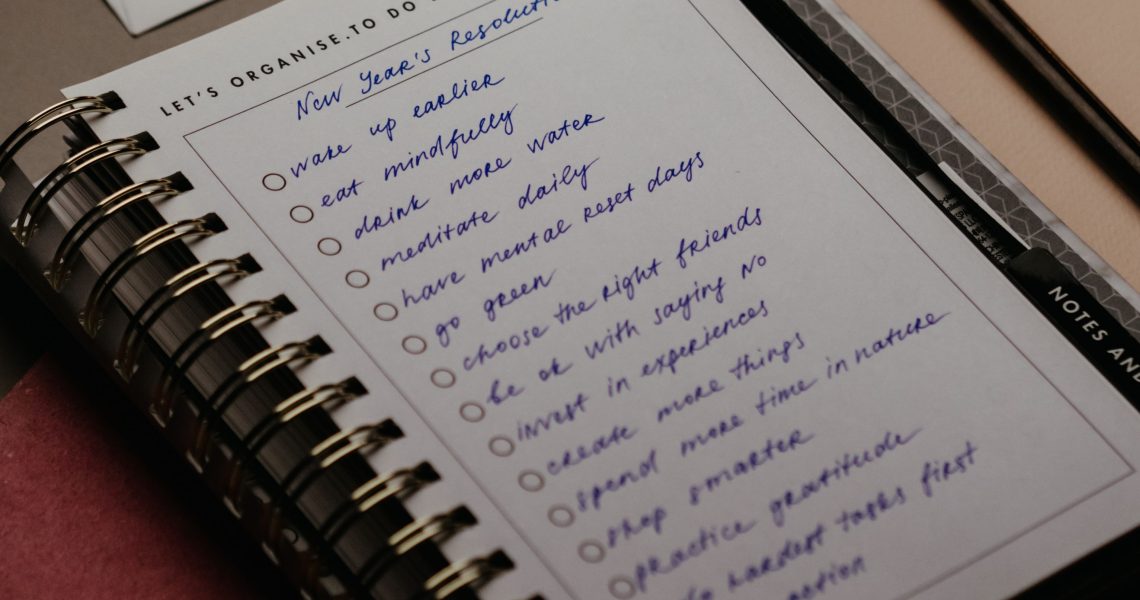
Putting pen to paper to write this article took a...
October 15, 2026
Don’t Let Procrastination Run Your Life
Imagine a life free from procrastination. A life where every task was completed and the to do list ceased to exist. Would you welcome such a life? Most people would, and some have tried many times to achieve it.
It would be fair to assume that, like them, to overcome your procrastinating habit, you have already considered a vast array of methods. The problem is, these methods do not guarantee results. Most do a good job at managing your list, but they do not tackle the root cause behind your procrastination. They tackle it as a habit, but it is more than that. Procrastinating is a way of life.
For as long as you can remember, you have been putting things off, and every time you did, you reinforced the habit. It became stronger. It became more powerful. It came to define you.
All is not lost though. There is light at the end of the tunnel. Having spent all your life living this way, it’s time for a new approach. One, from day one, where leaving tasks undone is a thing of the past, and where you are more productive.
For that, you need a system.
First, you will need to take stock, which will help you focus and enable you to start forming new ways of behaving. Next, you will need to read all your outstanding tasks to refresh your memory. Then, you must internalise each one, by working through them in your imagination whilst dealing with any obstacles that crop up. Finally, you will need to perform the tasks for real.
This system is built on the idea that motivation alone does not work. Motivation always gets off to a good start, but like inexperienced marathon runners, it runs out of steam quickly, making progress slow.
Repeatedly you said you would tackle your list. Repeatedly fell back in to your old ways. You only proved what James Clear, author of the best selling Atomic Habits implies: Quick bursts of motivation don’t last.
This is why to change your life, you need a fail safe system that helps you not only understand why you procrastinate, but one that reprogrammes your mind so you can overcome it. It must be easy to implement and effective.
Let us begin by taking stock.
Let us look back to see if we can work out how it all began. Cast your mind back to your school days, to a time when your teacher assigned homework. To begin with, you would complete it and hand it in on time. Over time, other demands would take priority. As a teenager being socially active is much more fun then staying in to do your homework, which explains why it was common to see hordes of students completing their homework last minute.
This laissez fair attitude towards homework also found its way to home life. Take your room, for instance, chances are it was a mess most of the time. You knew you should keep it clean and tidy, but you did not want to be told when. Your parents did not agree. They wanted you to keep on top of it, to keep the mess to a minimum, to see that there was a floor somewhere hidden away. And boy, were they on your case about it. How often did a voice from downstairs shout up asking if you had tidied that room yet? With you replying, “in a bit,” or “I’ll do it later” Eventually, you knew you had to do it, even if it was only to stop them from hassling you. You knew there was no other way. What you did not realise that seeds were being sown.
The bottom line is this: To avoid consequences, jobs get done.
When you left school and entered the real world, you discovered that people could punish you for leaving tasks incomplete and were less forgiving about it.
Take a boss, for instance. At work, any boss will take a dim view when a delegated task is not actioned on time. They only have a finite amount of patience, and it quickly wears thin especially when they are forced to listen to your excuses over and over again. As a result, to avoid being summoned in to their office, tasks get done.
However, when you leave the office and head home, something happens along the way. The fear of consequences fade and by the time you are sat on the sofa a transformation has taken place. At home, your mind switches from being productively focused to being not so productively focused. It enters an state of “not right now – later.”
When you are alone with only yourself to answer to, the consequences of procrastinating carry less weight. At work, I would be made to sit though a performance review meeting if I didn’t meet a deadline. At home, that never happens. At best, I would open the to do list app, reschedule the task, then get back to watching the show. Zero consequences.
Once again, the simple fact remains: Avoiding consequences dictates what gets done right now. If the consequences are tolerable, minimal, or non existent, then the task can be left until later.
Ultimately, if we can get away with it we will. You are not alone. A browser search confirmed that worldwide, at least 95% of people procrastinate. It also says that most have tried to stop multiple times! Psychologically speaking, at least 20%-25% of us are known as chronic procrastinators.
With that in mind, you know what your current situation is. You know you are somewhere in between being a chronic procrastinator and a multiple attempter, and being someone who needs a nudge every now and then. Where ever you are, it has led you here.
Making big lifestyle changes is not easy. The biggest change you have made so far was when you upgraded from pen and paper to a to do list app. It felt like progress. The list is organised, colour coded, grouped and tagged. I don’t want to burst your bubble but the list is still the list, with loads still to do.
Let’s compare like for like for a moment. A pen and paper method versus a modern-day app. Using a pen and paper is easy to start with but it has its drawbacks. Writing take time. Crossing off items creates a mess. Rewriting the list is cumbersome. Overall, a pen and paper is easy to use but it is not that user friendly when it comes to recording progress. An app, on the other hand, make it easier to edit, easier to delete, easier to organise, and is mobile. An app is convenient.
However, an app’s sole purpose is to store tasks that we do not want to do right now. They reduce our cognitive load, which gives our brain breathing room. Their very design allows us to forget about tasks until sometime in the future, which conversely highlights the their biggest problem. We can easily add and organise tasks endlessly, which could encourage us to spend more time adding and organising than doing.
To prevent this from happening, we must see an app as a means to an end. They are great for adding tasks when you are out and about, But not so great at making us productive.
To maximise your task productivity, a different approach is required, one that will break the cycle. There will be resistance, which is natural, but your mind forms new pathways when you perform old actions in new ways.
Assuming you have a master list that may or may not be organised, take it out and read every task that is outstanding. If you have sub-lists, go through each in turn. This will show you your current situation. If it has been a while since your last task stock check, this memory refresh will bring all outstanding tasks front and centre.
If your master list is organised into sub lists, you might be able to skip this step. If not, organise your master list into location based sub-lists. For example, add all garage jobs to a garage list, all garden jobs, to a garden list, all shop-based tasks, to a shop list, and so on. By chunking down, you will reduce overwhelm. Do that now.
Now, choose a list that you would like to process first. Just to remind you, for now, you are only working on this list mentally.
To demonstrate, let us assume you are working with the garage list. Visualise yourself standing in your garage. Now read each task one at a time – this will limit any exposure to anxiety. Mentally visualise what each task entails and see yourself doing each one in turn. If you run into any obstacles that have to be dealt with in real life, then visualise yourself dealing with those obstacles as well.
A typical obstacle in the garage could be as follows: Let’s say that you have to store away some paint pots. Currently there are boxes in the way. Mentally clear the space by moving the boxes to where they need to be, then go back to dealing with the paint. This level of detail takes effort, but the payoff is worth it – A mental alarm has been set.
The next time you happen to go into the garage, a mental reminder triggers automatically because your brain has already created a version of reality where a task has already been completed. The imagination schedules a mental reminder to prompt you when your internal and external worlds correlate. In other words, you will programme yourself to remind yourself to do something that your brain already thinks it has done.
This process is known informally as process and obstacle visualisation, but more scientifically as prospective memory. It is process that bridges the gap between intention and action.
Repeat the above step for all the tasks on your working sub-list and, when the time is right, mentally repeat it for all sub-lists.
The last step is to act.
It is now up to you. Only you can decide when to physically start completing tasks and begin to tick them off. Some of you may come across this article late at night, which is not ideal if everybody else in the house is asleep. Do not let that deter you. In silence, practice the mental work to get the hang of it because making small, targeted changes has big effects.
When you are able to take action, some good advice to build confidence would be to complete smaller tasks first. With a few under your belt, this strategy will feel like it is working. When that happens, nothing will hold you back, and the life you dream of will be one task closer.

Credits.
This article was inspired by James Clear, Atomic Habits. 2018
Related Posts


I want to discuss something that affects us all: finding...

Remember the conversation we had when we delved into the...